A Marine Lost His Service Dog After 14 Years — Then a Shelter Photo Brought a Familiar Face Back Into His Life
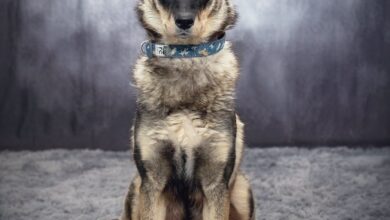
A shelter photo cannot bring a dog back. For Marine veteran Brandon Quinnelly, however, one photograph introduced a new companion at a moment when the absence of an old one was especially painful. The dog in the picture was Ares, and his resemblance to Brandon’s late service dog, Achilles, made Brandon want to meet him.
Best Friends Animal Society shared their story on November 11, 2026. It brings together two journeys: a veteran learning to live without the dog who had accompanied him for 14 years, and a shelter dog whose condition had once made an adoption photograph seem a long way off.
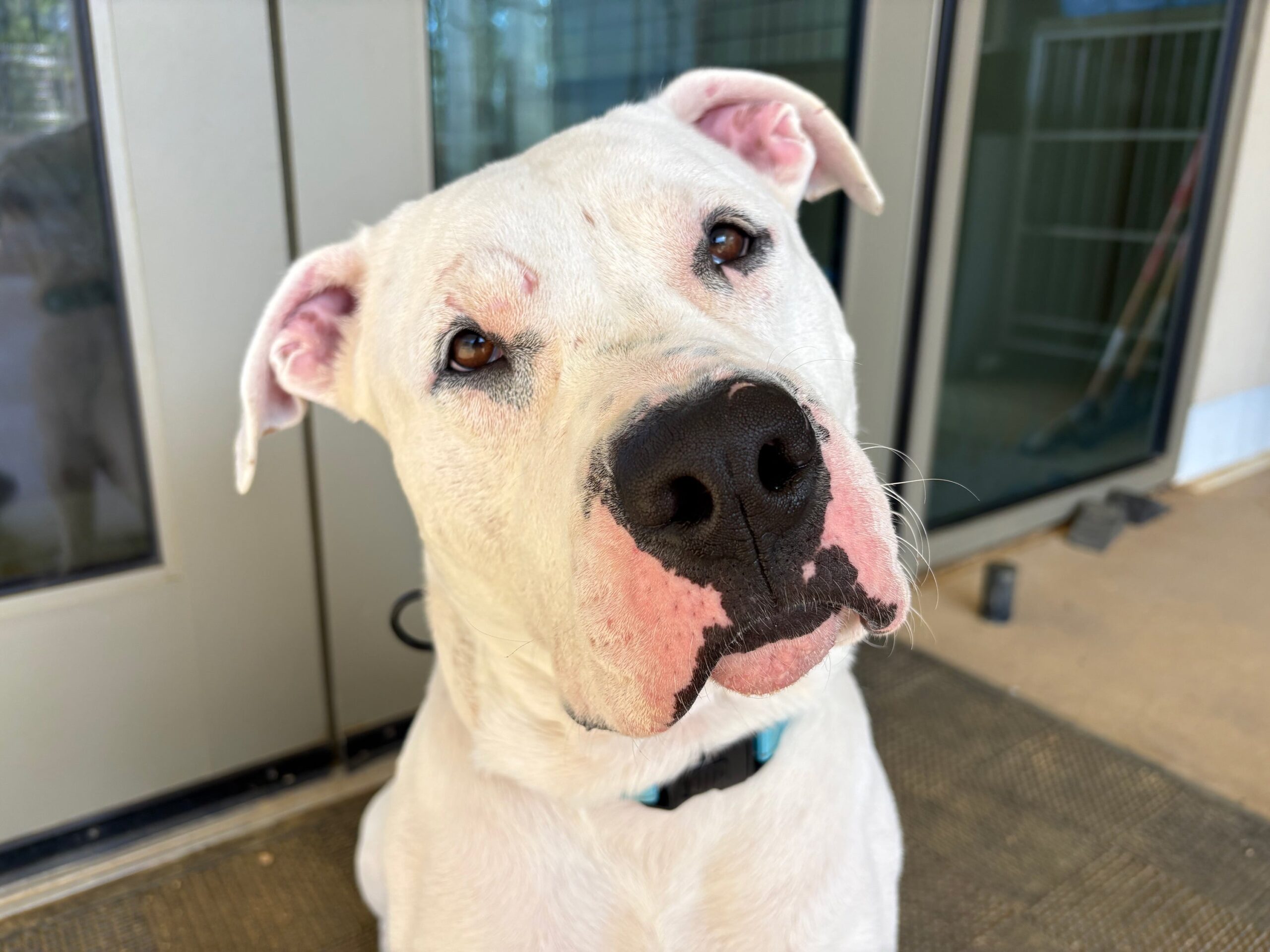
Before there was an adoption photo
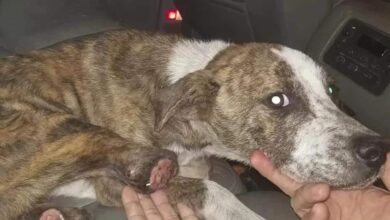
Ares arrived at Shawnee Animal Services in Oklahoma seriously ill. He was unresponsive and feverish, with fleas, facial abrasions, and a swollen front leg. The staff’s first task was to address the dog in front of them, rather than imagine where he might eventually live.
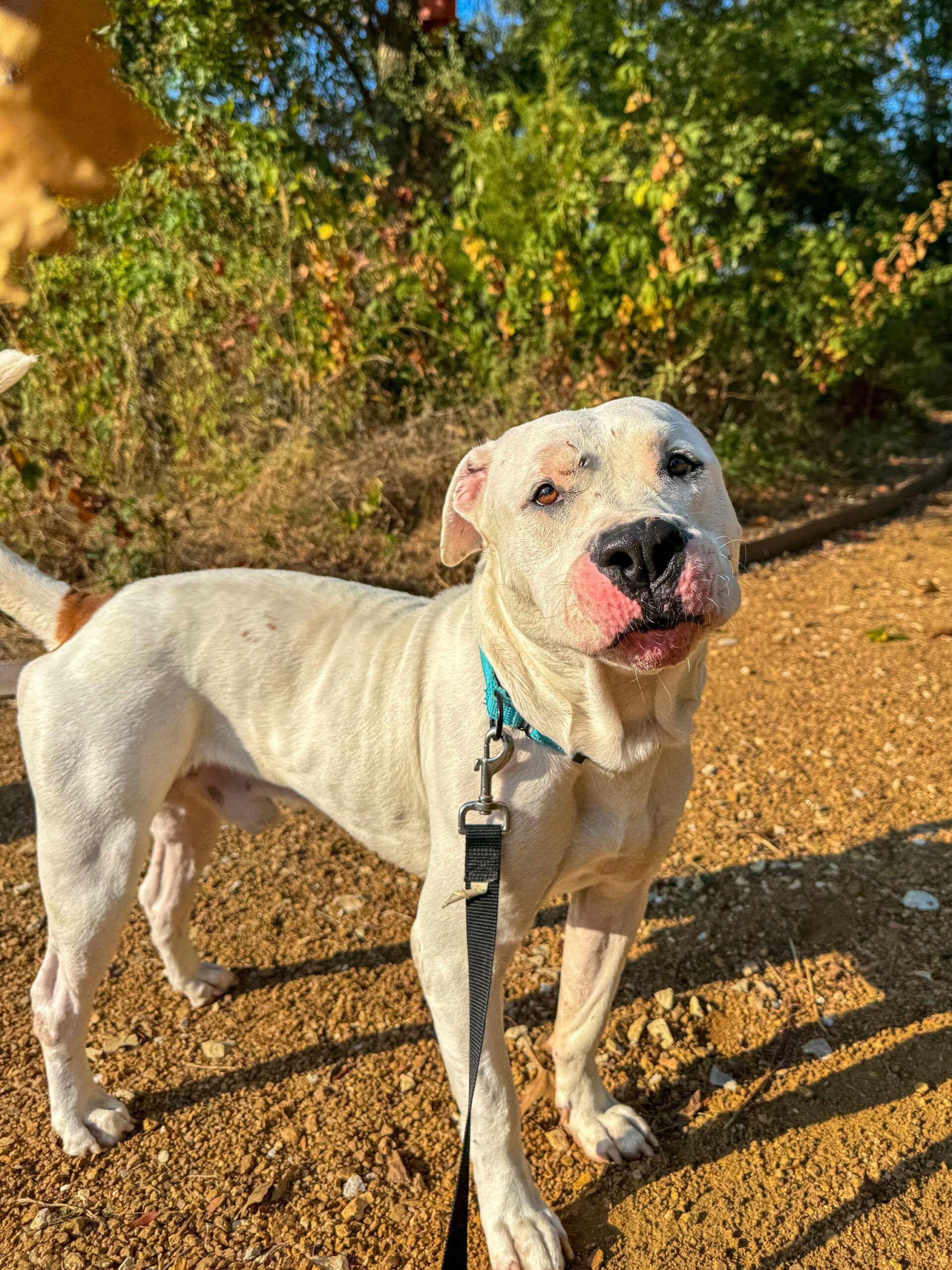
They bathed him and treated the fleas. Within hours, his temperature returned to normal, the swelling began improving, and he ate. Those changes were encouraging, but he still required further veterinary attention. A better appetite did not mean that the work of caring for him was finished.
The shelter already had a connection with Best Friends. Sophia Proler, a regional director with the organization, had previously helped the facility obtain fans when its air conditioning failed. That relationship became important when Ares needed another place to continue his care.
An animal control officer made the transport possible, using a day off for a seven-hour round trip to the Best Friends Pet Resource Center in Bentonville, Arkansas. It was an act of practical commitment: time spent driving so that one dog could reach the next people equipped to help him.
A different dog emerged during recovery
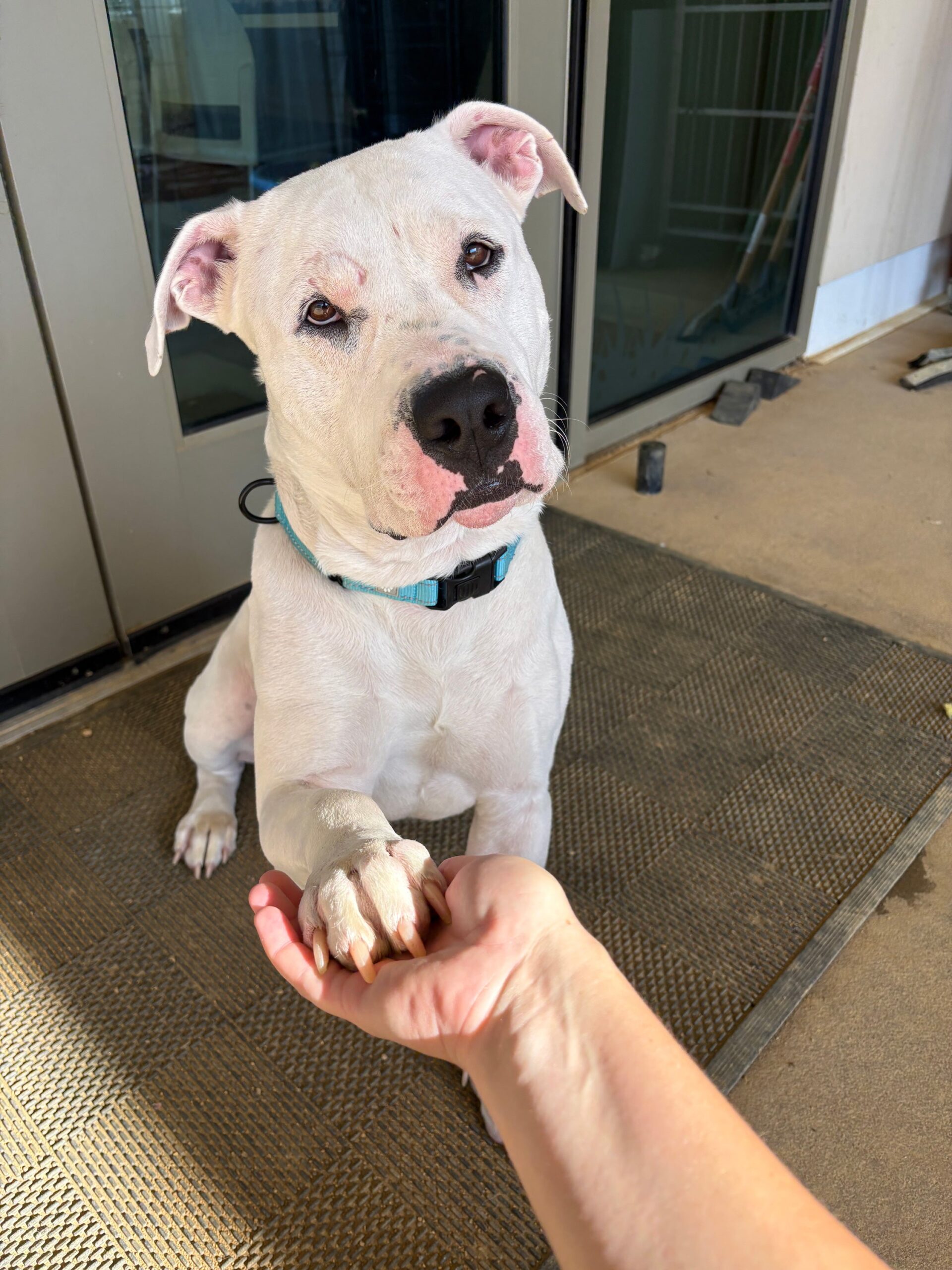
At Best Friends, Ares received treatment and recovered. As his health improved, staff could get to know the dog beyond his symptoms. He was affectionate and sociable, and one of his habits was particularly endearing: he liked putting a paw into someone’s hand.
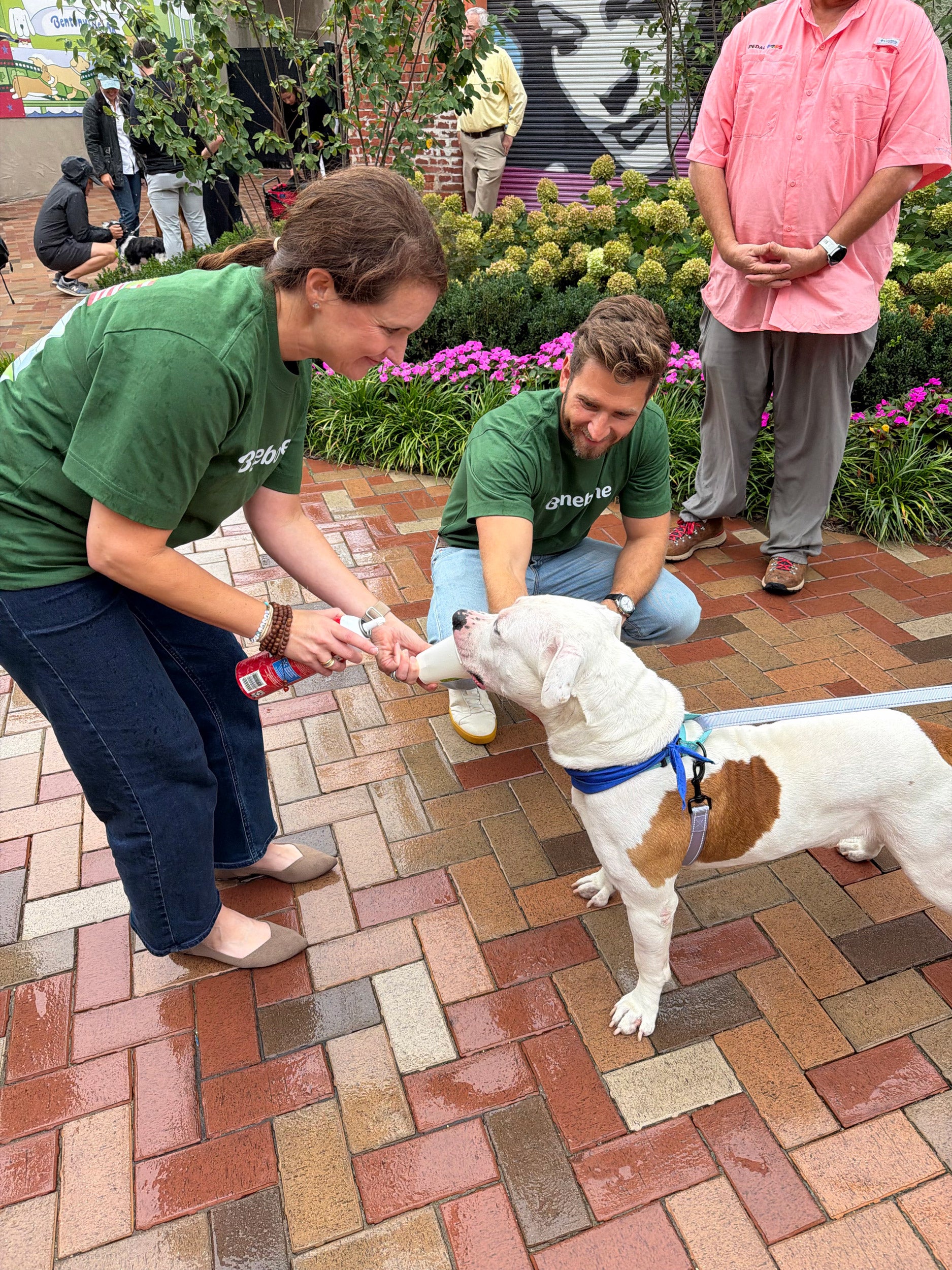
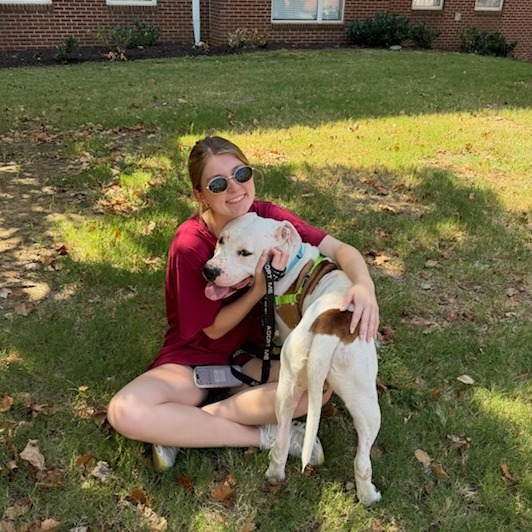
Photographs from this stage show a white dog with an expressive face and a brown patch on his body. They also show ordinary moments made possible by his recovery, including time outside and a treat offered by a person. Ares had become a dog people could picture sharing their days with.
One of those people was Brandon. His own history made the photograph unusually powerful. He had served in the Marine Corps from 2001 until his medical retirement in 2010, completing six deployments. He was living with chronic PTSD, and Achilles had been a service dog and companion for 14 years.
Losing Achilles meant losing a particular dog and a longstanding partnership. Ares did not have to be identical to Achilles for the resemblance to matter. It gave Brandon a reason to look more closely, and then a reason to call.
The meeting became an adoption
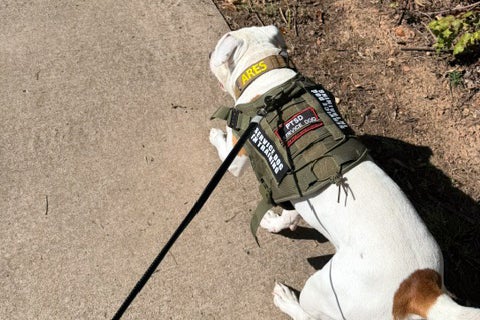
Brandon went to meet Ares and adopted him that day. Training started the following day. In the account published by Best Friends, Ares was beginning the process of becoming Brandon’s next service dog; the story did not describe that training as complete.
At home, Ares also brought a personality of his own. Brandon described an affectionate dog who was happy to be physically close, even though he weighed 68 pounds. He was talkative and comfortable sharing the bed. Those details move the story beyond a photograph of a dog who resembled someone Brandon had loved.
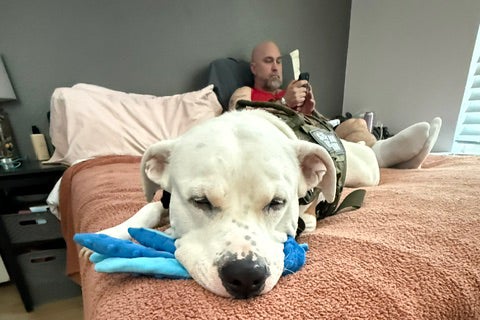
Ares had his own habits, his own presence, and a new relationship to build. The photograph of him resting on the bed with Brandon nearby captures something simple but significant. A dog who had arrived at a shelter unresponsive was now relaxed in a home, close to the person who had chosen him.
Achilles remains part of Brandon’s history. Ares’s arrival does not diminish those 14 years or turn grief into something neatly resolved. It opens another chapter, with training still to do and companionship already taking shape.
The route to that home depended on people at several stops: the staff who addressed Ares’s first symptoms, the officer who drove on a day off, the team that continued his treatment, and the veteran who recognized something familiar in his face. By the end of that journey, Ares was no longer waiting for someone to notice him. He had a place beside Brandon.