She Came Home Missing Both Back Feet — Years Later, Audrey Was Traveling With the Musicians Who Refused to Give Up on Her
When Jessica Lynn and Steve Sterlacci welcomed Audrey into their lives in 2020, they were taking responsibility for a dog with substantial injuries and an uncertain recovery. Both of Audrey’s hind feet were missing. She also had a spinal injury, and caring for her would involve much more than providing food and a safe place to sleep.
Years later, Audrey would be traveling with the couple and becoming part of their life in music. The story between those points is one of repeated treatment, adaptations, and ordinary care carried out over a long period. Renewed coverage in November 2026 introduced more readers to a rescue that had begun during the pandemic.
An unexpected request during a stopped year
Jessica, a country singer, had seen her touring schedule disrupted in 2020. A friend shared an urgent request for a foster home for a dog rescued from an abandoned property in Texas. Jessica and her husband Steve, a guitarist, decided to help.
In a first-person account published on December 8, 2022, Jessica described what that decision came to mean. Audrey needed wound care and protection for her injured hind limbs. She also needed diapers because of incontinence. The work quickly became part of the couple’s daily routine.
They could bring her into a home immediately. Giving her a comfortable, more mobile life would take much longer. There were open wounds, infections, and the challenge of protecting the ends of her legs from further damage. The couple made padding and tried to find practical solutions while continuing veterinary treatment.
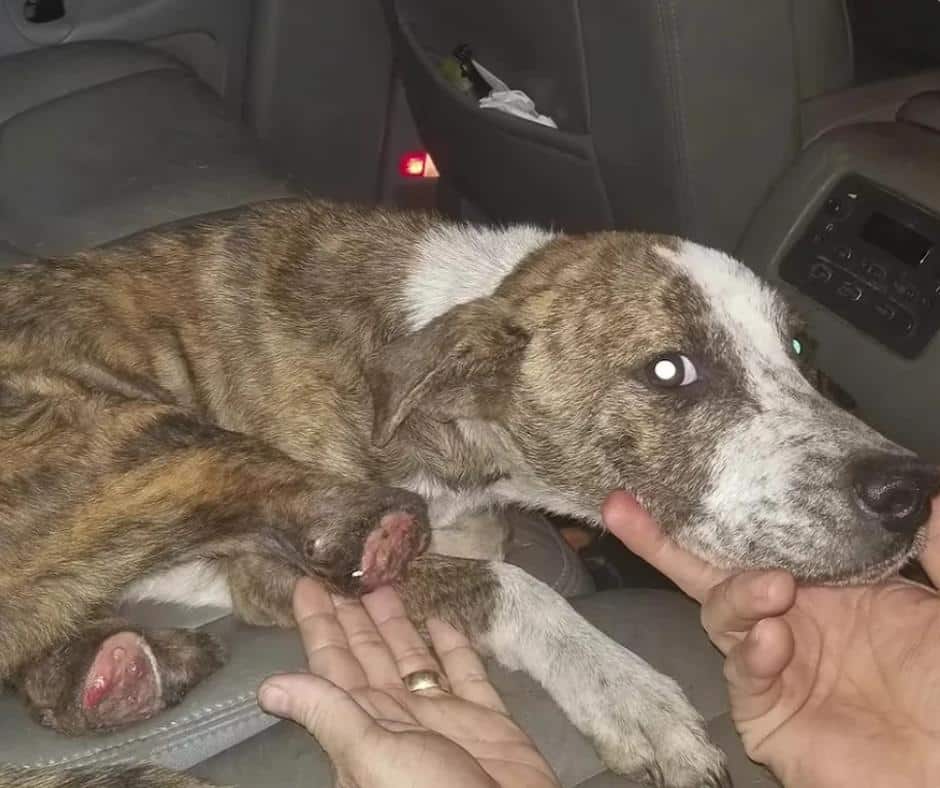
Those tasks were not a single turning point. They had to be repeated as Audrey’s needs changed. A caring home was the beginning of the effort, rather than proof that the difficult part had already passed.
Progress that took years
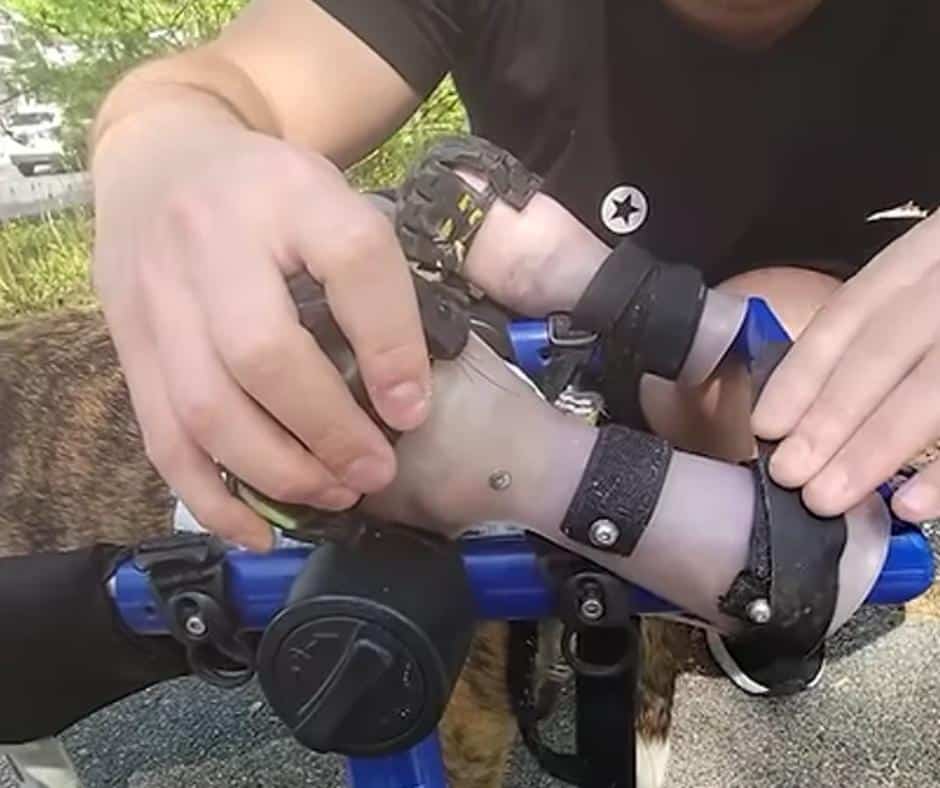
Jessica’s account described a period of roughly two and a half years marked by treatment and setbacks. Audrey underwent six surgeries. The family also explored mobility equipment, including a wheelchair and prosthetic devices, to help her move.
The photographs accompanying later coverage show how personal that assistance could be. In one, hands work with the straps and components of a mobility device. It is a close view of a task that takes attention: fitting equipment to an individual dog’s body and needs.
Audrey’s progress did not come from one object alone. Her family’s account describes a continuing combination of veterinary care, physical support, protective materials, and adjustments. The goal was to make life more comfortable and give her greater freedom to move.
Eventually, Jessica described Audrey walking and running. For a family that had spent so much time dealing with wounds and trying to protect her legs, that development carried the weight of everything that had preceded it. It was a change they had worked toward without being able to rush it.
Her increased mobility did not erase every care need. The spinal injury and incontinence remained part of the family’s account. Audrey could enjoy a fuller life while still depending on people for tasks that many other dogs did not require.
A place in the couple’s working life
As touring returned, Audrey became part of Jessica and Steve’s travels. She accompanied them on their tour bus and became a familiar presence around their performances. Jessica affectionately described her in the language of their musical world, as a companion with a place in the operation.
That development gives the story a second kind of change. Audrey’s life had initially been organized around the urgent needs of an injured rescue dog. Later, her family was also finding ways to include her in the things they did together, beyond the house and the treatment routine.

The image of the couple holding Audrey captures that inclusion. She is close to both of them, part of the scene rather than somewhere outside it. The dog they had welcomed in response to an urgent foster request had become a permanent presence in their shared life.
Jessica’s first-person telling also made clear that the relationship had affected her. Taking care of Audrey during a period when work and plans had changed gave her another focus. The story was not only about what the musicians could provide for their dog; it was also about what living with Audrey came to mean to them.
More than a transformation photograph
Audrey’s journey can be introduced in two images: a dog with severe injuries, and the same dog held by a loving couple. The years in between are what make those images meaningful. They include operations, repeated care, equipment, and people who kept adjusting their lives to meet her needs.
The November 2026 retelling is a reminder of that earlier commitment. Audrey was not newly rescued that month, and her story was not an overnight recovery. It was a life built gradually after the rescue, with both progress and continuing responsibilities.
By the time she was traveling with Jessica and Steve, the question of where Audrey belonged had already been answered through their actions. They had made room for her in the home, in the daily routine, and eventually on the road.