An Ambulance Was Taking His Owner to the Hospital — Before It Left, the Dog Rested His Muzzle in the Hand Beside the Stretcher
When Ray collapses during a walk, a neighbor holds his dog’s leash while help arrives. The ambulance can take Ray, but someone must decide what happens to Max until the man who knows his routine can return.
Ellen recognized the red harness before she understood why the dog was standing in the road.
Then she saw Ray on the ground.
She put down her shopping bag, called for an ambulance, and gave the location. The dog’s leash lay close to his hand.
Max stood over the edge of Ray’s coat, looking between the people gathering nearby.
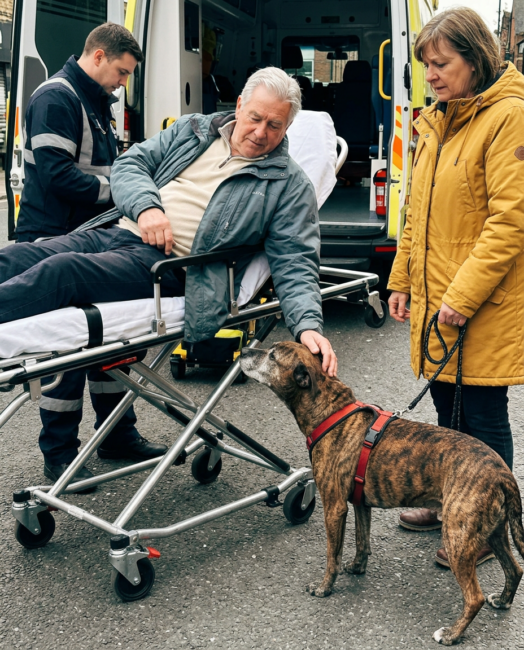
Ellen knew them from the morning route. Ray usually nodded when he passed her gate. Max usually stopped long enough to investigate whatever had been planted closest to it.
Now she kept her voice low and followed the instructions she was given.
When the medical crew arrived, she offered to hold the dog.
One of them handed her the black leash. She moved Max far enough away to give them room, keeping herself between him and the traffic.
He turned every time someone knelt beside Ray.
“It’s all right,” she said, although she was careful not to promise what she did not know.
Ray was awake while the crew prepared to move him. He answered some questions, paused over others, and looked toward Ellen when he heard Max’s tags move.
“I’ve got him,” she said.
Ray looked down at the leash in her hand.
The dog took a step forward. Ellen waited until someone indicated where they could stand without interfering.
She brought him beside the secured stretcher.
Max did not jump. He raised his muzzle under the hand resting near its edge, and Ray’s fingers moved against the gray fur around his nose.
Ellen loosened her grip just enough to let the leash hang without pulling.
For several seconds, the dog stayed there.
Then a crew member needed the space. Ellen guided him back, and Max followed after one last look toward the stretcher.
Ray asked her to call his daughter.
She took the house key with his permission and listened while he gave her the information she needed. Her grocery bag was still standing by the wall.
Then the ambulance left.
Ellen waited until it was out of sight before looking down at the dog.
Max was facing the direction it had gone.
She had offered to hold a leash while other people handled an emergency. Now she was holding the only immediate plan for an animal whose person was no longer there.
She called Ray’s daughter, Julia.
Julia was trying to arrange travel from another part of the country. She thanked Ellen, asked about her father, then asked whether Max was all right.
“He’s with me.”
“He’ll need his dinner.”
Ellen glanced at the key in her hand.
“Tell me where everything is.”
They went to Ray’s house first.
Max knew the way. He walked toward the red brick steps and waited at the door while Ellen found the right key.
Inside, the place was orderly in a way that made her feel she had entered during an unfinished task.
A clean dish stood near the sink. Ray’s other shoes were beside the back door. Max’s bed was against the kitchen wall, with an old blue blanket folded over one end.
The dog looked into the kitchen.
Then he returned to the hall.
Ellen brought him water and followed Julia’s directions about his food. She found the information needed for his care and checked which number to call if she had concerns.
She could manage the afternoon.
The night was a different question.
Ellen worked early shifts several days a week. Max could not simply be left to wait in a house where the door would not open at its usual time.
Julia offered to call around, but there was nobody close enough who could take over immediately.
Ellen sat at Ray’s kitchen table with the phone.
Max came and stood near the chair, then went back toward the hall.
“I’m going to see what we can arrange,” she told Julia.
She called her neighbor Peter.
He had met Max often enough to know him, and he was home on the mornings Ellen worked. He could help with walks, but his own stairs made an overnight stay difficult.
Ellen’s house had space.
Between them, they began assembling something more useful than a single offer made in a hurry.
Peter would cover the early walk and stay until Ellen returned. Ellen would bring Max to her home, keep his bedding and routine familiar, and handle the evenings.
Julia would remain involved in the decisions and the information they needed.
Ellen checked her rooms before bringing him over. She put away things that might get knocked down, made a quiet place for his bed, and asked Julia about anything that could upset him.
The blue blanket came with them.
Max stopped at Ellen’s gate as if expecting the usual brief investigation. When she opened it fully, he followed her inside.
He checked the kitchen, returned to the front door, and stood there.
Ellen did not keep calling him away.
She sat where he could see her and let the unfamiliar room become quieter.
Eventually, his nails moved across the floor. He sniffed the bedding, turned, and lowered himself onto it.
She sent Julia a photograph.
Later, Julia called from the hospital. Her father was receiving care and would need to remain there while his condition was assessed.
She put the phone where he could hear Ellen.
“Max has had his dinner,” Ellen said. “His blue blanket’s here.”
Ray asked whether the dog had gone out.
She told him about the route, the gate, and Peter’s plan for the morning.
The details gave him something more exact than an assurance that everything was fine.
Peter arrived early with the same wool hat he wore on their street. Max watched him enter, then recognized the leash being lifted from its hook.
The first walk was shorter than Ray’s usual route.
Peter learned where Max stopped and which corner he tried to take on the way back. Ellen learned that he preferred his bed turned slightly so he could watch the doorway.
Their arrangement needed adjustments.
On a morning when Peter had an appointment, another neighbor covered the gap. Ellen wrote the changes where they could all see them, keeping Julia informed instead of making assumptions about what her father would want.
Nobody needed Max to become cheerful for a photograph.
He ate, slept, went out, and sometimes waited by the door. They watched for changes and kept his familiar care going.
Julia reached the hospital and later visited Ellen.
Max went to her at once.
She knelt long enough for him to inspect her coat, then stood and looked at the blue blanket in the kitchen corner.
“Dad will ask where that is,” she said.
Ellen told her to say it was still Max’s.
When Ray could return home, the plan changed again. His recovery meant he could not immediately take every walk or lift every bag of food.
Peter kept the morning arrangement. Ellen offered the evenings until something else was settled. Julia stayed to help her father adjust.
Max went home after the house was ready.
Ellen brought him through the door on the black leash. Ray was seated in his usual chair, with enough space around him for the dog to approach safely.
Max stopped, sniffed, and moved closer.
Ray lowered a hand.
The dog placed his muzzle into it, just as he had beside the ambulance.
This time, nobody needed to move the stretcher.
Ellen unfastened the leash when it was safe to do so and hung it beside the door. Before leaving, she checked the time of the next walk.
The red harness stayed where Ray could see it.