Part 2: The Underweight Greyhound Would Sleep Only When a Volunteer Left One Hand on the Floor — Then the Night Camera Revealed What She Was Really Checking For
Part 2 — What the Camera Saw at 3:14 A.M.
The following morning, Lena and I reviewed the overnight recording in the office. The camera did not capture audio clearly, but it provided a wide view of Wren’s kennel and the hallway outside it.
At first, the footage seemed ordinary.
Wren remained on the bed while I sat outside the gate. My hand was visible beneath the bottom rail, palm down, fingers relaxed.
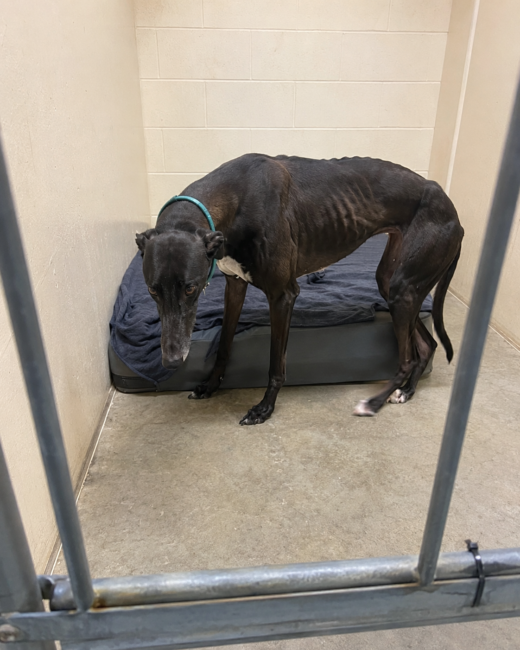
At 1:36, Wren’s eyes opened.
She did not look at my face.
She looked directly at the hand on the floor.
After confirming it was there, she closed her eyes again.
At 2:02, the same thing happened.
At 2:47, I shifted my shoulders while asleep against the wall. Wren lifted her head, located my hand, and rested again.
Then came 3:14.
My elbow slid from my knee, pulling my hand approximately eight inches away from the gate. Wren woke less than ten seconds later. She looked at the empty patch of concrete and stood.
She did not approach me.
Instead, she paced until my arm slipped forward and my fingers again entered her view. The instant they touched the floor, she returned to bed.
Wren was not asking to be stroked. In fact, movement toward her still produced a clear withdrawal response—head turned away, mouth tightly closed, shoulder pressed against the partition.
The stationary hand served another purpose.
It was a visible landmark of human presence.
We could not know precisely what Wren remembered or whether she associated sleep with a particular past event. Her racing records could tell us where she had been housed, but not what she felt there.
What we could observe was enough: Wren repeatedly checked whether a person remained nearby, and she rested only when that presence could be verified without physical contact.
Our first instinct was to arrange overnight volunteer shifts. It sounded compassionate, but it was not sustainable. More importantly, teaching Wren that sleep always required a person’s hand might strengthen the very dependency we hoped to ease.
We contacted Dr. Priya Shah, the veterinarian who examined our new arrivals.
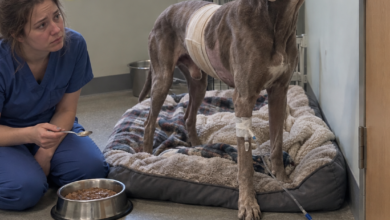
Wren’s initial physical assessment confirmed a body-condition score of three out of nine. She had reduced muscle over her back and hindquarters, pressure calluses on both elbows, thin hair above the hips, and mild dental wear.
Her bloodwork showed slight anemia and low-normal protein levels, consistent with inadequate conditioning or nutrition, though not enough to identify a single cause. She had no fracture, acute track injury, or neurological deficit.
The medical plan was measured: small meals four times daily, parasite screening, repeat bloodwork, soft bedding, limited exercise, and regular inspection of the callused areas.
The behavioral plan had to be equally gradual.
For the second night, I sat in the hallway again but began with my hand six inches farther from the gate. Wren paced for seventeen minutes before lying down.
When she woke, she stared at the greater distance.
She still found the hand.
On the third night, we placed a low cot beside her kennel. I rested there with my hand visible through the bottom rail, but I did not move it toward her.
At dawn, Wren was sleeping on her side for the first time.
Her legs stretched across the blanket, exposing the thin skin over one hip. Her breathing was deep enough to move her ribs.
Then another volunteer opened the hallway door.
Wren sprang upright and struck her elbow against the kennel wall.
The callus did not break, but the skin around it reddened. We added padded bumpers and contacted Dr. Shah.
Recovery could not depend on preventing every sound.
Wren would eventually need to learn that a door opening did not mean the safe person had vanished forever.
The question was how to teach that without taking away the only reassurance she currently understood.
Part 3 — The Distance of One Floor Tile
We began measuring progress in floor tiles.
Each tile was twelve inches wide. On the first three nights, my hand rested just outside Wren’s gate. On the fourth, I moved one tile away after she fell asleep.
Wren woke, raised her head, and searched.
Her ears rotated toward my breathing. Her eyes found my hand.
She remained down.
That single foot of distance became our first repeatable sign of trust.
During the day, Wren faced different challenges. She had apparently spent little time inside a home-like room. The ceiling fan, television, glass door, and humming refrigerator in our socialization suite all required careful introductions.
Grass was difficult too.
The first time her paws touched the rescue yard, she froze. Her legs widened for balance, and she lifted one foot as though the ground itself were unstable.
No one pulled her leash.
We stood quietly until she lowered the paw. She took four steps, stopped, and looked back toward the building.
Her confidence returned fastest when another calm Greyhound walked nearby. A retired male named Otis moved at a slow pace and rarely crowded her. Wren began following his route along the fence.
Even outside, however, she tracked human departures.
If I handed her leash to another volunteer and walked away, she turned toward my footsteps. Her ears followed until the sound disappeared behind the building.
She did not lunge after me. She simply stopped moving.
We changed our approach. Instead of one person vanishing while another restrained her, I walked only ten feet away, paused, and returned before Wren became overwhelmed.
Then fifteen feet.
Then around one corner for two seconds.
Each return was deliberately uneventful. I did not kneel, embrace her, or flood her with praise. I simply resumed walking.
People could leave and come back.
That lesson took weeks.
Her feeding routine provided another way to create predictability. Meals arrived at the same four times each day. We used a slow-feeding bowl because Wren initially swallowed without chewing.
By the end of her first week, she began approaching when she heard the food cart. Her tail still remained low, but the tip moved once when Lena entered with breakfast.
It was not a dramatic wag.
It was barely more than a question written in motion.
The elbow Wren had bumped during her nighttime startle became swollen despite the padding. Dr. Shah examined it and diagnosed mild inflammation around an existing pressure callus. There was no open lesion, but the area needed protection.
We replaced her bed with thicker memory foam and encouraged her to change resting positions. That was easier said than done. Wren preferred lying where she could see the kennel gate, always on the same side.
A soft rolled towel placed behind her shoulders helped redistribute pressure. We also began short, slow walks to strengthen the muscles that supported her narrow frame.
Her weight rose from forty-nine to fifty-one pounds.
Then it stopped.
Parasite tests were negative. Her appetite remained inconsistent, especially after nights with thunderstorms. When thunder covered the sound of footsteps, Wren abandoned her bed and stood at the gate.
During one storm, I sat outside her kennel and placed my hand down.
Wren looked at it, but she could not settle.
The old reassurance was no longer enough.
I remembered how well she followed Otis outside. With veterinary approval and careful supervision, we moved his bed into the adjoining kennel.
Otis circled twice and fell asleep with his back against the partition.
Wren listened to him breathing.
For the first time during a storm, she lay down without checking my hand.
That could have been the breakthrough we needed.
But the next morning, Otis left for a foster home.
When Wren saw the empty kennel beside her, she refused breakfast and resumed the five-step pacing pattern from her first night.
We had taught her that one safe presence could be replaced by another.
We had not yet taught her how to feel safe when every visible reassurance was gone.
Part 4 — Teaching the Hand to Leave
The setback after Otis left lasted three days.
Wren ate only portions of her meals and slept in brief intervals. Her pacing was slower than it had been at intake, but the pattern was unmistakable.
Gate. Back wall. Turn. Listen.
I felt responsible. We had allowed her to depend on Otis before she had enough coping skills to tolerate his absence.
Dr. Shah reminded us that recovery was rarely linear. Wren had not lost everything she learned. She still accepted the orthopedic bed. She entered the yard without freezing. She allowed Lena to fasten her leash without retreating to the wall.
The empty kennel had simply exceeded her current capacity.
We developed a new overnight routine based on gradual disappearance rather than abrupt absence.
At bedtime, I placed my hand on the floor as before. After Wren’s breathing slowed, I moved it one tile away.
If she remained settled for ten minutes, I lifted the hand onto my knee but stayed seated within view.
Next, I moved to the low cot.
Then to a chair near the doorway.
The first night, we completed only the first step.
The second night, Wren tolerated my hand on my knee for forty seconds before standing. I returned it to the floor and waited for her breathing to settle.
We were not testing her.
We were building a sequence she could predict.
By the sixth night, Wren slept for twelve minutes while I sat with both hands in my lap. She woke, checked the floor, and looked toward my chair.
I remained still.
Her head hovered above the bed.
Then it lowered again.
No hand.
No pacing.
Just sleep.
During the day, we introduced a rubber mat as another portable marker of safety. It carried familiar scents from her bedding but did not require a person to remain attached to it.
Initially, the mat lay beneath my hand. Later, it remained after I stood. Wren sniffed it, stepped onto it, and followed me to the socialization room.
We placed the mat beside a sofa. She would not climb onto the sofa, but she lay on the floor while Lena washed dishes ten feet away.
The dishwasher started.
Wren’s ears rose. Her front feet shifted beneath her chest, ready to stand.
Lena dried her hands and placed one palm on the floor.
Wren looked at it.
Then she looked at the mat under her own body.
She stayed down.
The object had begun to carry part of the reassurance.
Her physical recovery also progressed. We increased her meals gradually, using a balanced veterinary diet rather than trying to replace lost weight too quickly. She reached fifty-four pounds during her fourth week.
The calluses remained visible, but the surrounding redness diminished. Fine black hair began appearing above her hips.
Wren still avoided direct petting. She tolerated brief contact required for examinations, harnessing, and cleaning, but affection had to remain her choice.
One afternoon, I sat in the yard with my hand resting beside me. Wren approached from behind and sniffed my fingers.
I did not turn.
She touched her nose to the side of my hand for less than a second.
Then she walked away.
It was the first time she had crossed the distance voluntarily.
We began searching for a foster home with experience caring for retired Greyhounds. The right household needed quiet sleeping space, predictable routines, secure fencing, and the patience to let Wren exist without constant touching.
Several applicants loved the idea of rescuing a former racing dog. Fewer understood that Wren might not cuddle, play, or sleep alone for months.
One family asked whether she could be trained to stay off the furniture.
Another wanted a dog that would greet grandchildren enthusiastically.
Neither was wrong for wanting those things. They simply were not right for Wren.
Then an application arrived from Ruth Calder, a sixty-one-year-old medical transcriptionist who worked from home. She had recently lost her thirteen-year-old Greyhound and lived with a calm senior mixed-breed dog.
Her application included an unusual question:
“If Wren needs a hand on the floor, how far away can the person be before she stands?”
Ruth was not asking how quickly the behavior could be stopped.
She was asking where Wren’s current boundary was.
Part 5 — The First Night in a House
Ruth visited the rescue four times before taking Wren home.
During the first meeting, she sat sideways on the socialization-room floor and kept her hands in her lap. Wren remained on the far side of the room.
Ruth did not lure her with food.
She did not call her repeatedly.
She spoke quietly to me about ordinary things while allowing Wren to listen to the rhythm of her voice.
After thirty minutes, Wren lay on her rubber mat.
During the second visit, Ruth placed her hand on the floor approximately four feet from the mat. Wren looked at it once, then slept for seven minutes.
On the third visit, Ruth brought a blanket that smelled like her home and her senior dog, Amos. Wren sniffed it but did not lie on it.
By the fourth meeting, Wren approached Ruth’s chair and touched her nose to the toe of Ruth’s shoe.
That was enough.
The foster transfer occurred six weeks after intake. Wren weighed fifty-six pounds, and Dr. Shah considered her medically stable. Her elbows still needed soft bedding, while her weight and blood values required monitoring.
We loaded her bed, rubber mat, measured food, harness, medical records, and the hallway camera into Ruth’s car.
The camera was not for entertainment.
It allowed us to identify pacing, startle episodes, and sleep duration without entering the room and disturbing her.
Ruth had prepared a quiet space beside her bedroom. A pressure-mounted gate kept the door open while preventing Amos from crowding Wren. Two beds offered different positions, and the rubber mat lay between them.
Wren inspected the room with her nose low. She startled at the furnace vent and refused to cross the polished kitchen floor until Ruth placed nonslip runners across it.
Amos observed from the hallway.
He was twelve, heavy around the middle, and more interested in finding dropped food than greeting another dog. His lack of excitement helped.
The first evening passed quietly. Wren ate half her meal and followed Ruth between the bedroom and kitchen. Each time Ruth entered the bathroom and closed the door, Wren stood outside it.
At bedtime, Ruth lay on a camping mattress beside the gate. She placed her left hand on the rubber mat.
Wren remained standing for twenty-eight minutes.
Eventually, her front legs folded. Her body followed.
Ruth did not move.
At 1:06 a.m., Wren woke and checked the mat.
The hand remained.
At 2:11, Ruth rolled onto her back and lifted her arm in her sleep. Wren stood.
The camera recorded her pacing for nearly four minutes before Ruth woke, noticed the movement, and lowered her hand again.
At 4:30, something changed.
Ruth’s hand slipped off the mat and rested behind her shoulder, completely hidden from Wren’s view.
Wren woke.
She raised her head and studied the empty mat.
Then she turned one ear toward Ruth’s breathing.
Amos was asleep outside the gate, snoring softly.
Wren remained upright for forty-three seconds.
Finally, she lowered her chin without seeing the hand.
The following morning, Ruth sent us the clip.
We watched it repeatedly, not because it looked dramatic, but because it captured a decision Wren had never made at the rescue.
She had verified safety through sound and familiarity rather than a visible human limb.
Her first week in the house was uneven. She slept better on nights when Ruth followed the exact routine. If dinner arrived late or a delivery driver knocked after dark, Wren paced.
On the ninth day, Amos barked suddenly at a raccoon outside the window. Wren bolted from her bed and slipped on a section of floor where one runner had shifted.
She did not appear injured, but by morning she was avoiding weight on her right front leg. Ruth contacted us immediately.
Dr. Shah found a mild muscle strain and prescribed rest, pain relief, and restricted walks. The incident also inflamed the pressure callus on Wren’s right elbow.
For several days, Wren associated the bedroom doorway with the slip. She stopped entering voluntarily and slept standing in the hallway until fatigue bent her legs.
Ruth moved the bed.
Then she placed the rubber mat beside it.
Finally, she lowered her hand to the floor and waited.
Wren approached.
But this time, instead of staring at the hand, she carefully placed one white rear toe on the edge of the mat.
Part 6 — What Safety Looked Like After Three Months
Wren’s strain improved within two weeks, but her confidence returned more slowly.
Ruth secured every floor runner with nonslip backing and added a path through the house. She never pulled Wren across the place where she had fallen.
Each day, they approached the bedroom doorway and stopped before Wren stiffened. Ruth placed the mat down, waited, and allowed Wren to decide whether to proceed.
Some days, Wren crossed.
Other days, she turned away.
Both choices were respected.
By the end of the third week, she entered the bedroom without the mat. She still glanced toward the floor beside Ruth’s bed, checking for the familiar hand-shaped landmark.
The hand was not always there.
Ruth began sleeping in her own bed again while Wren rested on the orthopedic bed below. For the first several nights, Ruth let one arm hang over the edge.
Wren could see her fingers.
Gradually, Ruth moved farther toward the center of the mattress.
The camera documented the transition in small pieces. Wren woke, checked the bed, and listened. Sometimes she stood. More often, she remained down.
Her average uninterrupted sleep increased from nineteen minutes during her first week at the rescue to nearly two hours.
Physical changes were easier to measure. At the three-month examination, Wren weighed fifty-nine pounds. Muscle had begun filling the long hollow areas beside her spine.
Her anemia had resolved. The pressure calluses were smaller and flexible rather than dry and thick. Soft black hair covered most of the previously bare skin above her hips.
Yet the most meaningful recovery never appeared on a laboratory result.
Wren began dreaming.
Her paws moved lightly against the bed. Her muzzle twitched, and a quiet breath escaped her nose. Before, even minor movements seemed to wake her.
Now she sometimes slept through Amos standing up, Ruth turning a page, or rain tapping the bedroom window.
She also started choosing brief contact.
At first, she leaned against Ruth’s knee only while being harnessed. Then she remained there after the buckle clicked.
One afternoon, Ruth sat on the floor sorting laundry. Her hand rested beside a pile of towels.
Wren entered the room and stopped.
She looked at the hand.
Ruth expected her to lie several feet away, as usual.
Instead, Wren crossed the room and lowered herself with her back touching Ruth’s fingers. There was no stroking. Ruth simply let her hand remain where Wren had placed herself.
After a minute, Wren sighed.
It was contact chosen by the dog, not contact imposed as the price of companionship.
We extended the foster arrangement before discussing adoption. Wren had made progress, but we needed to know how she would handle changes in Ruth’s schedule.
The first major test came when Ruth spent one night at her sister’s home following a minor medical procedure. A trusted neighbor, Elaine, stayed with Wren and Amos.
Wren knew Elaine from daily walks, yet the bedtime routine felt different. She paced for twelve minutes and refused her bed.
Elaine sat on the floor and placed her hand beside the rubber mat.
Wren looked at it but did not settle.
Elaine then laid Ruth’s worn cardigan beside the bed and moved her hand away.
Wren sniffed the sleeve.
She circled once and lay down.
She woke six times overnight but never paced longer than a minute. Each time, she listened to Elaine’s breathing before lowering her head.
When Ruth returned the next morning, Wren did not leap, bark, or race toward the door.
She walked to Ruth, pressed her shoulder briefly against Ruth’s leg, and returned to bed.
The quietness of the greeting made it more important, not less.
Wren had endured a night when the familiar person was absent.
The safe person had still come back.
One month later, the rescue approved the adoption.
Ruth signed the papers at her kitchen table while Wren slept nearby. No celebration was staged around her. No one woke her for a photograph.
The camera continued recording.
At 2:38 that night, Wren opened her eyes. Ruth’s hands were beneath the blanket and invisible.
Wren listened.
Then, without lifting her head, she closed her eyes again.
Part 7 — The Place Where the Hand Used to Be
Six months after Wren left the racing kennel, Ruth brought her back to the rescue for a routine visit.
Wren entered through the same side door where she had once been carried from the transport van. She paused at the threshold, listening to the carts, latches, and footsteps inside.
Her ears moved.
Her body did not freeze.
She walked across the hallway with Ruth beside her.
The old kennel had been cleaned many times and now held another frightened Greyhound. Wren showed no particular interest in the gate, so we did not ask her to revisit it.
Instead, we met in the socialization room.
Wren’s coat had deepened to glossy black. Her ribs could be felt but no longer counted from across the room. The skin over her hips was covered with short fur, and only faint gray patches remained on her elbows.
I sat on the floor.
Without thinking, I placed my hand on the tile.
Wren noticed.
For a moment, she stood exactly as she had on the first night—head lowered, ears angled toward my breathing, eyes focused on the space between us.
Then she approached.
She sniffed my fingers and walked past them to Ruth.
Wren folded onto her portable bed near Ruth’s chair. Ruth kept both hands around a cup of coffee.
No hand touched the floor.
Wren slept anyway.
The camera at Ruth’s house remained useful during storms or schedule changes, but it rarely recorded pacing now. Most nights, Wren went to bed before Ruth.
Sometimes she slept beside Amos. Sometimes she chose the room across the hall. On warm evenings, she rested alone near the cool kitchen tiles.
Independence did not mean she had stopped caring whether Ruth was there.
When Ruth returned from errands, Wren still listened from her bed. One ear lifted at the key. Her head rose when the door opened.
Then her body softened.
The person had gone.
The person had returned.
Several years of Wren’s life could not be rewritten by a few months in a quiet home. She remained sensitive to closing doors and unfamiliar footsteps. She might always need predictable routines and places where no one approached without warning.
But she no longer fought sleep to monitor the humans around her.
One evening, Ruth woke after midnight and found Wren standing beside the bed. She lowered her hand over the edge, expecting the old request.
Wren sniffed it.
Then she turned, returned to her own bed, and settled with her back facing the mattress.
The hand remained suspended for a moment before Ruth drew it beneath the blanket.
Wren did not open her eyes.
She had once needed that hand as proof that she would not wake alone.
Now she knew safety could remain even when she could not see it.
Follow the page for more powerful dog-rescue stories about recovery, quiet courage, and the people who remain when a frightened animal finally closes its eyes.
Additional Curiosity Title
For Years, This Thin Racing Greyhound Never Woke Beside Anyone Safe — Then a Volunteer Saw Why She Checked the Same Empty Patch of Floor All Night
Additional SEO description — 132 characters: A newly rescued Greyhound watches one volunteer’s hand through the night, revealing the quiet fear that years of racing left behind.
Prompts tạo ảnh
Prompt ảnh 1 — Một cảnh
Ảnh tài liệu cứu hộ chân thực, vertical 4:5 chính xác, gồm đúng một cảnh và chỉ một con chó, tuyệt đối không có người, bàn tay, nhân viên, chó khác, động vật khác, bóng người, hình phản chiếu, điện thoại, màn hình hoặc khung điện thoại. Bối cảnh 12:35 đêm trong hành lang yên tĩnh của một cơ sở cứu hộ Greyhound nhỏ gần Jacksonville, Florida; ánh đèn trần huỳnh quang đã giảm một nửa, nền bê tông xám sạch nhưng hơi cũ, cổng chuồng kim loại ở tiền cảnh và ba vách kín màu trắng ngà.
Một Greyhound cái bốn tuổi tên Wren, cao thanh mảnh, hiện chỉ khoảng 22 kg trong khi cân nặng khỏe mạnh dự kiến khoảng 27 kg; lông ngắn màu đen hơi ngả nâu ở vai, mảng ngực trắng hẹp hình ngọn lửa, đúng hai ngón chân sau trái màu trắng, vòng cổ martingale màu xanh teal bạc nhẹ, không thẻ. Tình trạng thiếu cân phải rõ nhưng đúng giải phẫu: nhiều xương sườn hiện dưới da, eo hóp sâu, cơ dọc sống lưng và đùi sau mỏng; vùng chai áp lực phẳng màu xám, khô nhưng nguyên vẹn trên cả hai khuỷu chân trước, lớp lông trên hai đỉnh hông mỏng đối xứng; không máu, không vết thương hở, không biến dạng.
Wren đứng cạnh giường foam chỉnh hình phủ chăn xanh xám dù hai chân sau đang run nhẹ vì mệt; đầu hạ thấp, miệng khép, tai ép ra sau nhưng xoay về phía hành lang trống, mắt nâu đỏ vì thiếu ngủ nhìn qua khe dưới cổng như đang chờ một dấu hiệu không xuất hiện. Một chân trước đã đặt lên mép chăn nhưng cơ thể vẫn không chịu nằm. Chó chiếm 65–75% sự chú ý; máy ảnh tầm mắt hơi cao, góc ba phần tư trực diện, cách 1,8–2,4 mét, như một nhân viên vội ghi lại khoảnh khắc cuối trước khi giúp đỡ.
Phong cách ảnh điện thoại hiện trường: bố cục hơi nghiêng và lệch tâm, màu tự nhiên nhạt, limited dynamic range, vùng đèn trần cháy nhẹ, độ sâu trường ảnh lớn, nhiễu bóng mịn, mild JPEG compression, bàn chân run hơi nhòe tự nhiên. Không cinematic, HDR, bokeh, studio, tạo dáng, beauty retouch, nước mắt kiểu người, thương tích đồ họa, chữ, caption, logo, ngày tháng hoặc watermark.
Prompt chuyển động 1
Video dọc 4:5 dài 8–10 giây; Wren thở nông, hai chân sau run rất nhẹ, một tai xoay theo âm thanh ngoài hành lang rồi cô chậm rãi hạ đầu nhưng giật mình nâng lên trước khi chạm chăn. Giữ nguyên toàn bộ mức độ thiếu cân, mảng lông, hai ngón chân trắng, vòng cổ và vùng chai khuỷu trong suốt clip; piano thưa cùng cello mềm và tiếng thông gió nhỏ, không lời thoại, chuyển máy đột ngột, hành động mạnh, méo giải phẫu, chữ hoặc logo.
Prompt ảnh 2 — Hai cảnh
Ảnh ghép tài liệu cứu hộ chân thực vertical 4:5 chính xác, gồm đúng hai khung hình liên tiếp xếp trên–dưới, mỗi khung chiếm khoảng một nửa chiều cao với khe ngăn trắng xám rất hẹp; cùng hành lang cứu hộ trong khoảng 12:30–12:45 đêm. Giữ đúng một Greyhound cái bốn tuổi xuất hiện một lần trong mỗi khung: thân cao mảnh, khoảng 22 kg, lông đen ngả nâu ở vai, mảng ngực trắng hẹp hình ngọn lửa, đúng hai ngón chân sau trái trắng, vòng cổ martingale xanh teal bạc nhẹ; thiếu cân với xương sườn, eo hóp, cơ đùi mỏng, hai vùng chai xám phẳng nguyên vẹn trên khuỷu và lông mỏng trên hai hông, tuyệt đối không đổi bên hoặc thay đổi mức độ.
Khung trên: Wren đi năm bước ngắn dọc cổng chuồng, thân cong nhẹ vì mệt, tai xoay theo tiếng chân người đang xa dần ngoài khung; giường foam và chăn xanh xám vẫn trống, chân sau hơi run, không có người trong khung.
Khung dưới: nữ tình nguyện viên 52 tuổi, da trắng, tóc nâu pha xám buộc thấp, mặc áo nỉ navy đơn giản và quần kaki tối, ngồi nghiêng trên sàn cách cổng khoảng một mét, mặt quay nhẹ sang bên để tránh nhìn chằm chằm; cô đặt đúng một bàn tay mở, bất động trên nền bê tông cạnh thanh dưới cổng nhưng không thò vào chạm chó. Wren đã nằm trên giường đối diện bàn tay, đầu còn nâng nhẹ, mắt kiểm tra các ngón tay; giữa tay và mõm chó vẫn có khoảng cách an toàn 45–60 cm. Con người phải bình thường, kiềm chế, không tạo dáng, không vuốt ve, không ôm hoặc kéo chó.
Duy trì cùng địa lý hành lang, hướng sáng, cổng, giường và thời gian giữa hai khung; ảnh điện thoại hơi lệch tâm, màu nhạt, limited dynamic range, đèn trần cháy nhẹ, độ sâu trường ảnh lớn, nhiễu mịn và mild JPEG compression. Không khung thứ ba, cảnh điều trị, hồi phục, nhận nuôi, chó khác, đám đông, cinematic, HDR, bokeh, studio, gore, chữ, caption, logo, ngày tháng hoặc watermark.
Prompt chuyển động 2
Video dọc 4:5 dài 8–10 giây chạy theo hai khung đúng thứ tự: Wren bước chậm hai bước, dừng lại và xoay tai về tiếng chân xa dần; sau đó tình nguyện viên hạ bàn tay xuống sàn thật chậm trong khi Wren nhìn bàn tay, gập chân trước và hạ ngực lên chăn. Giữ nguyên nhận dạng, mức thiếu cân, chai khuỷu, ánh sáng và khoảng cách an toàn; piano tối giản, cello dịu cùng âm thanh hành lang, không lời thoại, vuốt ve, zoom gấp, méo giải phẫu, chữ hoặc logo.
Prompt ảnh 3 — Ba cảnh
Ảnh ghép tài liệu cứu hộ chân thực vertical 4:5 chính xác, gồm đúng ba khung hình liên tiếp: hai khung nhỏ đặt cạnh nhau ở hàng trên và một khung lớn toàn chiều ngang phía dưới chiếm khoảng 60% tổng diện tích; khe ngăn hẹp sạch, không viền trang trí. Tất cả diễn ra trong cùng hành lang cơ sở cứu hộ gần Jacksonville từ 12:30 đến 1:20 đêm.
Khóa tuyệt đối nhận dạng Wren trong mọi khung: Greyhound cái bốn tuổi, khoảng 22 kg, lông ngắn đen hơi nâu ở vai, mảng ngực trắng hẹp hình ngọn lửa, đúng hai ngón chân sau trái trắng, vòng cổ martingale xanh teal bạc nhẹ; xương sườn hiện rõ, eo hóp, cơ dọc lưng và đùi sau mỏng, hai vùng chai áp lực xám phẳng nguyên vẹn ở khuỷu, lông mỏng trên hai hông; không đổi bên, không tăng giảm tình trạng, không máu hoặc vết thương hở.
Khung nhỏ trên trái: Wren đứng cạnh chiếc giường foam trống, chân sau run, đầu hạ thấp, tai xoay theo hành lang khi dấu chân cuối cùng vừa biến mất; không người.
Khung nhỏ trên phải: nữ tình nguyện viên 52 tuổi mặc áo nỉ navy và quần kaki tối ngồi nghiêng ngoài cổng, đặt bàn tay phải mở trên nền bê tông nhưng không đưa về phía chó; Wren đứng cách tay khoảng một mét, cổ kéo dài thận trọng để quan sát.
Khung lớn phía dưới: khoảnh khắc cứu hộ cảm xúc rõ nhất nhưng kiềm chế; Wren nằm nghiêng trên chăn xanh xám, cơ thể gầy được đỡ bởi giường foam, mắt vừa khép nhưng một tai còn hướng về nữ tình nguyện viên đang tựa lưng vào tường ngoài chuồng. Bàn tay cô nằm bất động sát thanh dưới cổng, cách mõm Wren 45–60 cm; không hề chạm, vuốt ve hoặc thò sâu vào chuồng. Chó là trung tâm cảm xúc, khuôn mặt người chỉ nhìn nghiêng tự nhiên và phụ trợ.
Duy trì đúng cổng, nền, giường, vị trí ánh sáng và màu sắc xuyên suốt; phong cách điện thoại hiện trường hơi nghiêng, imperfect bystander framing, màu tự nhiên nhạt, limited dynamic range, đèn cháy nhẹ, deep focus, nhiễu mịn, mild JPEG compression và chuyển động tay rất nhẹ. Không khung thứ tư, inset, chó bị lặp trong cùng một panel, cảnh ban ngày, điều trị, hồi phục, nhận nuôi, đám đông, cinematic, HDR, bokeh, studio, chữ, caption, logo, ngày tháng hoặc watermark.
Prompt chuyển động 3
Video dọc 4:5 dài 8–10 giây tiến qua ba cảnh: Wren xoay tai và thực hiện hai bước đi chậm, tình nguyện viên hạ bàn tay mở xuống nền rồi giữ bất động, sau đó Wren gập chân trước, hạ đầu lên chăn và chớp mắt chậm một lần về phía bàn tay. Bảo toàn mức thiếu cân, dấu lông, chai khuỷu, con người, ánh sáng và bố cục; piano thưa, cello ấm cùng tiếng thông gió nhỏ, không lời thoại, vuốt ve, zoom gấp, nhân vật mới, méo giải phẫu, chữ hoặc logo.
Prompt ảnh 4 — Two-Scene Circular Inset Layout có caption
Tạo một ảnh kể chuyện cứu hộ chân thực vertical 4:5 chính xác, full-bleed 1120 × 1400 px, theo bố cục TWO-SCENE CIRCULAR INSET LAYOUT giống tinh thần ảnh tham chiếu nhưng không sao chép con chó, bối cảnh hoặc chữ của ảnh mẫu.
Phần ảnh chính chiếm khoảng 72–76% chiều cao: cảnh ban đêm trong hành lang cơ sở cứu hộ, Wren nằm trên giường foam xanh xám sát cổng chuồng, thân Greyhound cái bốn tuổi cao mảnh và thiếu cân, lông đen ngả nâu ở vai, mảng ngực trắng hình ngọn lửa, đúng hai ngón chân sau trái trắng, vòng cổ martingale xanh teal; xương sườn và eo hóp rõ, chai khuỷu xám phẳng nguyên vẹn, không máu. Nữ tình nguyện viên 52 tuổi mặc áo nỉ navy ngồi tựa tường ngoài cổng, khuôn mặt nhìn nghiêng tự nhiên; cô đặt một bàn tay mở trên nền, không chạm chó. Wren đang ngủ nhưng đầu hướng về bàn tay. Ảnh điện thoại hiện trường, ánh sáng huỳnh quang đêm nhạt, deep focus, không cinematic.
Ở góc trên trái đặt đúng một inset hình tròn, chiếm khoảng 24–28% chiều ngang, có viền vàng dày sạch. Bên trong inset là cảnh cận nối tiếp: Wren vừa mở mắt trong đêm và nhìn thẳng xuống bàn tay vẫn nằm trên sàn; chỉ hiển thị đầu, vai Wren và bàn tay, không thêm chó hoặc người mới. Giữ đúng toàn bộ dấu lông, vòng cổ, thể trạng và vị trí tương đối; inset không được che khuôn mặt Wren trong ảnh chính.
Trên phần ảnh chính, đặt một caption ngắn bằng chữ in hoa trắng đậm, viền hoặc bóng đen mảnh, ở vùng trống phía trên bên phải, không che chó, tay hoặc khuôn mặt người:
“SHE WOKE UP JUST TO CHECK THE FLOOR”
Phần dưới cùng là một dải caption nền đen đặc, chiếm khoảng 24–28% chiều cao toàn ảnh; chữ trắng đậm, sans-serif, căn giữa, 3 dòng, khoảng cách dòng rõ, không bị cắt:
“SHE DIDN’T NEED TO BE PETTED
SHE JUST NEEDED THE HAND
TO STILL BE THERE”
Bảo đảm tổng thể chỉ có hai cảnh: một cảnh chính và một inset tròn; không thêm panel, ảnh nhỏ, khuôn mặt lặp, chó khác, logo, watermark, ngày tháng hoặc chữ ngoài hai caption bắt buộc. Chữ phải đúng chính tả, sắc nét và đọc rõ trên điện thoại; ảnh chân thực, màu tự nhiên nhạt, limited dynamic range, fine shadow noise, mild JPEG compression, không HDR, bokeh, studio, gore hoặc giải phẫu méo.
Prompt chuyển động 4
Video dọc 4:5 dài 8–10 giây giữ nguyên ảnh chính, inset tròn và hai caption: Wren trong cảnh chính thở chậm trên chăn; inset cho thấy cô mở mắt, nhìn xuống bàn tay rồi khép mắt, trong khi các ngón tay chỉ dịch rất nhẹ theo nhịp thở của tình nguyện viên. Giữ chữ hoàn toàn cố định, rõ nét; piano thưa kết hợp cello ấm và âm thanh hành lang nhỏ, không lời thoại, vuốt ve, zoom mạnh, thay đổi bố cục, méo cơ thể, chữ mới hoặc logo.